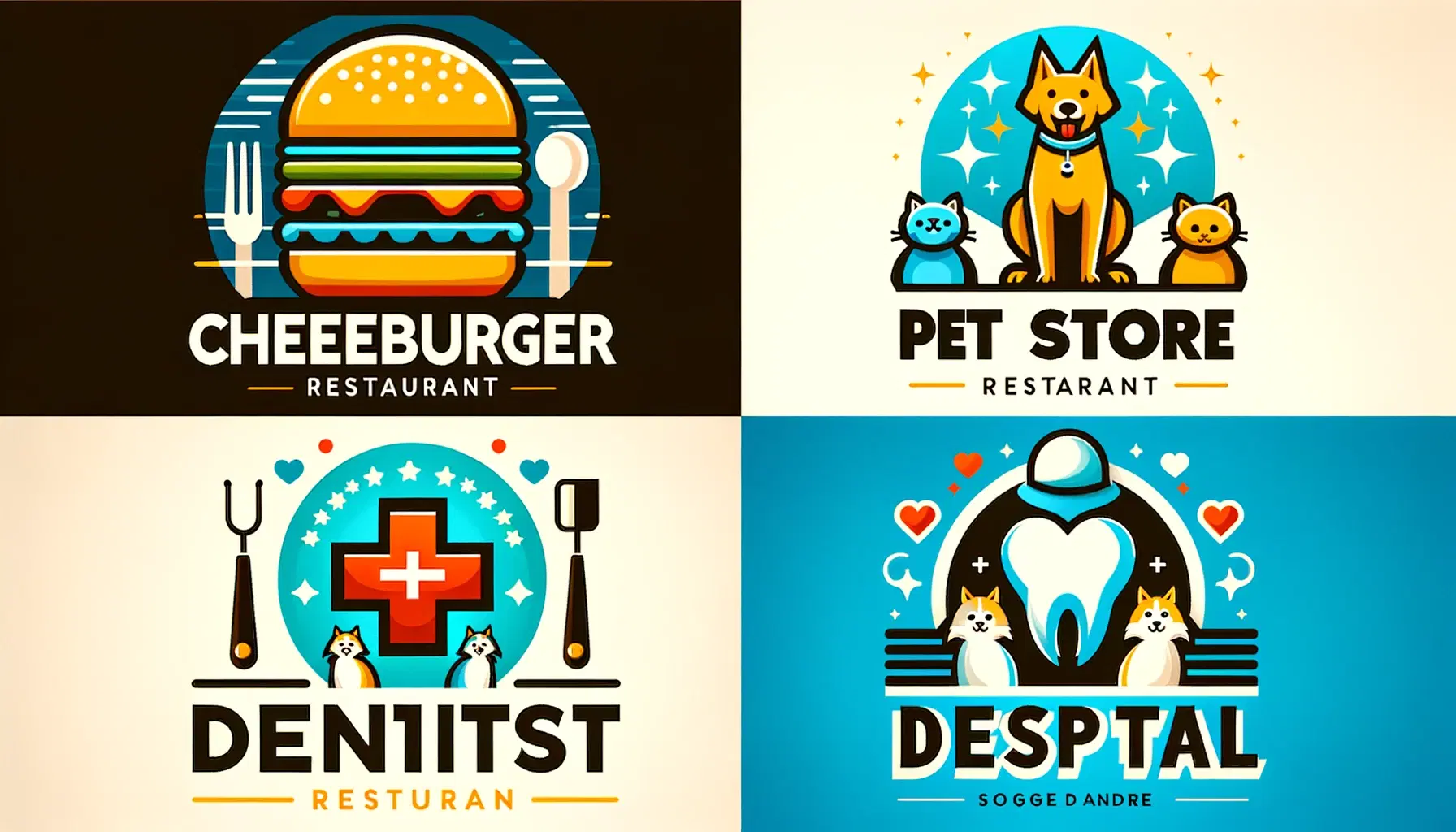

AI wasn't built to make logos. It was built for photos, illustrations, and art — and logos are a different beast entirely. They need to be clean, scalable, and work at 16x16 pixels as well as on a billboard.
That said: for early-stage startups, side projects, or anyone who needs a working visual identity before they have budget for a designer, AI logo generation is genuinely useful. You won't get a perfect SVG file. You will get 20 visual directions in 10 minutes — and that's worth something real.
Here's exactly how to make it work.
Disclosure: NinjaChat is our product; we built it, so weigh our pick accordingly.
AI Tools for Logo Generation: Quick Comparison
| Tool | Best Model | Logo Quality | Free Tier | Paid Price |
|---|---|---|---|---|
| NinjaChat | Flux Pro, Flux 1.1 Ultra | High — clean edges, professional | Limited (free Flux tool) | From $11/mo |
| Midjourney | Default | High — artistic, brand-forward | No | From $10/mo |
| Adobe Firefly | Firefly 3 | Medium — safe, commercial-ready | Limited | $4.99/mo |
| Canva AI | Magic Media | Medium — decent for simple marks | Yes | Free tier available |
| DALL-E (ChatGPT) | DALL-E 3 | Medium — struggles with precision | Yes (limited) | $20/mo (ChatGPT Plus) |
Bottom line: Flux Pro gives the cleanest logo concepts of the group; on NinjaChat it runs in Studio on a paid plan. Midjourney produces beautiful results but doesn't handle clean geometric logos as well. DALL-E is convenient but limited.
Which AI Model Works Best for Logos?
Not all image generators are equal when it comes to logo work. Here's what actually matters:
Flux Pro / Flux 1.1 Ultra — Currently the best option for clean, commercial-quality logo concepts. Flux models handle sharp edges, solid color fills, and geometric shapes better than most competitors. The "Ultra" variant gives higher resolution, which matters when you're checking detail. You can try Flux Dev free at NinjaChat's Flux tool (one image without an account); Flux Pro and Ultra need a paid plan.
Midjourney — Better for brand-forward, artistic logos where you want character and personality over geometric precision. A craft brewery, a tattoo studio, a creative agency — Midjourney shines here. It's weaker on minimal tech logos where you need clean lines.
DALL-E 3 — Decent for simple concepts. Struggles with precision and consistently adds unwanted gradients or textures. Text in logos is still broken (more on this below).
Stable Diffusion (local/ComfyUI) — Most flexible if you know what you're doing. You can fine-tune models and use ControlNet to constrain composition. High skill floor.
One universal truth: None of these models handle text reliably inside logos. Every AI image generator still manges, distorts, or invents letters. The workaround is simple — generate the visual mark, then add your company name separately in Canva or Figma. This hybrid approach works well.
How to Prompt AI for a Logo (The Actual Technique)
The biggest mistake people make is typing something like: "a logo for my coffee shop called Bean & Co."
That prompt will give you a photorealistic coffee shop scene, not a logo. You need to describe the visual style you want, not the concept.
Prompt structure that works:
[Style] + [Shape/Element] + [Color palette] + [Industry context] + [Negative constraints]
5 real prompt examples:
1. Minimal tech startup:
"Minimal flat logo mark, single geometric shape, navy blue and white, clean vector style, negative space design, no text, no gradients, white background"
Why it works: "Flat" and "vector style" push the model toward clean lines. "No gradients" prevents the muddy results you'd otherwise get.
2. Fitness brand:
"Bold geometric logo icon, stylized lightning bolt merged with a human figure, black and orange, flat design, strong contour lines, icon only, no text, transparent background"
Why it works: Specifying the exact visual metaphor (lightning bolt + figure) gives the AI something concrete to work with.
3. Creative agency:
"Abstract logo mark, overlapping circles forming a subtle eye shape, gradient-free, two-color, sage green and charcoal, minimal, clean, professional, icon only"
Why it works: "Gradient-free" and "two-color" produce results that are actually usable as logos.
4. Food/Restaurant:
"Vintage badge logo, circular frame, fork and leaf motif, warm terracotta and cream palette, hand-drawn style, retro illustration, no text inside"
Why it works: "Circular frame" and "badge" are strong compositional cues. AI handles vintage/retro styles well.
5. SaaS / Software:
"Isometric cube icon, data flow lines, deep purple and electric blue, flat vector, simple, modern, 3D perspective, icon only, no text"
Why it works: Isometric geometry is something Flux handles very cleanly.
Common mistakes to avoid:
- Including your brand name in the prompt and expecting readable text
- Saying "professional logo" without specifying visual style — AI has no idea what "professional" looks like
- Not specifying "no text" or "icon only" — you'll get garbled letters
- Skipping the background instruction — add "white background" or "transparent background" explicitly
Step-by-Step: Generate a Logo on NinjaChat
NinjaChat Studio has the full Flux model family — Flux Schnell, Flux Dev, Flux Pro, and Flux 1.1 Ultra — on paid plans, from $11/month. To test a prompt first, the free Flux tool gives one image without an account, then a small hourly allowance once you sign in.
- Go to AI Image Generation on NinjaChat or directly to the Flux AI Image Generator
- Select your model. Flux Pro for best quality. Flux Schnell for fast iteration (good for testing prompts)
- Paste your prompt using the structure above
- Set aspect ratio to 1:1 (square). Logo marks almost always start square
- Generate 4–8 variations. Don't stop at one — the variance between outputs is high
- Download the best candidates (PNG)
- Open in Canva — remove the background using Background Remover if needed, then add your brand name in your chosen font
The whole process from prompt to usable logo concept takes under 15 minutes.
When AI Logos Work vs When to Hire a Designer
AI works well when:
- You need quick visual directions to explore brand identity before committing to a designer
- You're a solo founder or early-stage startup with limited budget
- You need a placeholder logo for a prototype, pitch deck, or MVP
- You have a clear visual style in mind and can articulate it in a prompt
- You're iterating on an existing brand direction
Hire a designer when:
- Your logo needs to scale perfectly to tiny sizes (favicon, app icon) — AI outputs often have detail that breaks at small sizes
- You need a true vector file (SVG, AI) — AI generators output raster images
- Brand identity matters for your business long-term (investor pitches, physical products, packaging)
- You need a full brand system: logo + variations + color palette + typography guidelines
- The logo has meaningful negative space or dual-meaning concepts — AI is bad at intentional clever design
The hybrid approach many founders use: generate 20 concepts with Flux, pick your favorite direction, then hire a designer to properly vectorize and refine it. You walk into the design brief knowing exactly what you want, which saves hours of back-and-forth and typically cuts the design fee significantly.
FAQ
Is AI logo generation free?
Partly. Flux Schnell and Flux Dev are open-source and free to run locally, and NinjaChat's Flux tool gives one free image without an account, then a small hourly allowance once you sign in. Flux Pro (higher quality) needs a paid plan. Canva's AI tools have a free tier. Midjourney has no free tier. NinjaChat plans also include AI chat for brainstorming brand names, taglines, or copy alongside your logo work.
Can AI make a logo with my company name in it?
Not reliably. Every current AI image generator — including Flux, Midjourney, and DALL-E — still struggles to render readable text inside images. Letters get garbled, mismatched, or invented. The reliable workaround: generate your logo mark without text, then add your company name as a separate text layer in Canva, Figma, or Photoshop.
What's the best AI model for logo generation?
Flux Pro is currently the best option for clean, commercial-quality logo marks. It handles geometric shapes and solid fills better than most models. Midjourney is better for artistic/illustrative logos where character matters more than precision. DALL-E is convenient but limited in control.
Will an AI-generated logo be unique?
AI generates new images from patterns in training data, so outputs are statistically unlikely to be identical to anything existing. That said, do a reverse image search on any logo you plan to use commercially, and check trademark databases in your jurisdiction. This is standard practice even for human-designed logos.
How do I get a vector file from an AI-generated logo?
AI image generators output raster images (PNG, JPG) — not vectors. To get a proper SVG or vector file, you need to either: (1) use a vectorizer tool like Adobe Illustrator's Image Trace or Vectorizer.ai, or (2) hire a designer to manually recreate the mark as a vector. For simple geometric logos, auto-tracing works well. For complex marks, manual recreation gives better results.
Can I use AI-generated logos commercially?
For Flux models accessed through NinjaChat, commercial use of generated images is permitted. Always verify the license terms for whichever tool you use. Adobe Firefly explicitly trains on licensed content and offers commercial use guarantees. Midjourney's commercial rights depend on your subscription tier.